

Drip Irrigation is the most efficient way to water potted plants on patios and balconies—saving water, time, and money compared to watering by hand. Yet, setting up a balcony drip system comes with real-world challenges and costs that are often glossed over. Here’s what actually works in 2024—and what still causes headaches for rooftop gardeners, apartment dwellers, and anyone looking to automate plant watering in small spaces.
Key Takeaways
- Drip irrigation uses 60% less water than manual watering—even on small patios—by targeting roots directly and reducing evaporation.
- Smart features like timers and app control help avoid overwatering, but common pitfalls include installation costs and clogging if not maintained.
- Few drip kits are truly “balcony-ready”—research before you buy, and know which features actually save you hassle and money.
- Drip Irrigation: What It Is and Why It Outperforms Manual Watering
- How to Set Up Drip Irrigation for Your Patio or Balcony
- Common Pitfalls and What the Research Really Shows
- Conclusion
- FAQ
Drip Irrigation: What It Is and Why It Outperforms Manual Watering
Drip irrigation delivers water directly to the base of your plants through a network of thin tubing and emitters. Unlike hand-watering or using a hose, drip systems apply water only where your plants need it—at their root zones. This method dramatically reduces water waste from evaporation and runoff. According to recent studies, properly managed drip setups reach 90 to 95% water efficiency—far outperforming the 50 to 70% efficiency seen when watering by hand or with a sprinkler. For small spaces like balconies, this can result in up to 60% water savings and significantly lower water bills over time. Plus, low-pressure operation (10 to 20 psi) means you save on utility costs if you use a pump or home water system.
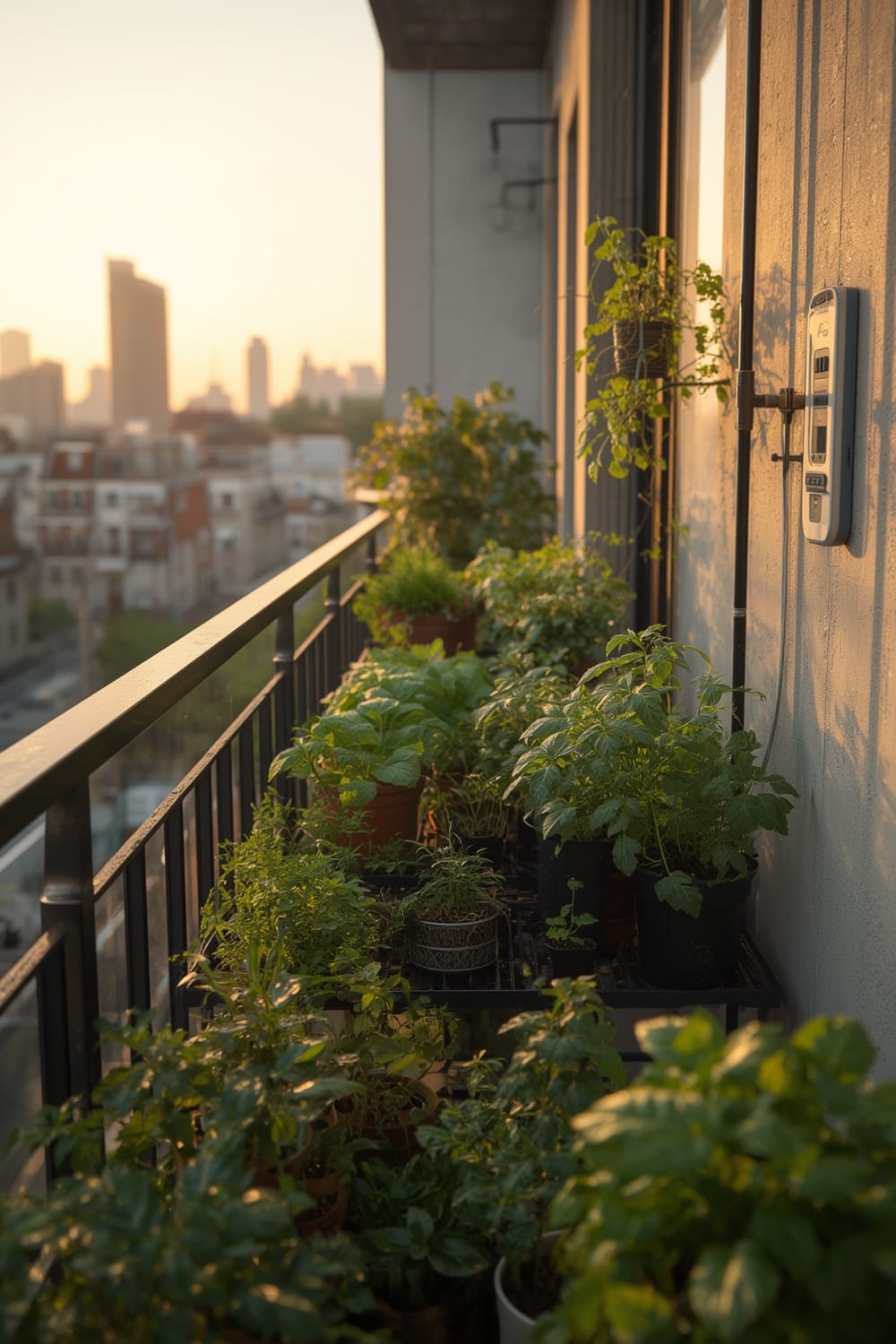
Despite clear efficiency advantages, drip kits designed specifically for balconies are rare, and users often have to customize agricultural or outdoor garden kits for small-space setups. Even so, the potential for lower water use and healthier plants makes drip irrigation the go-to solution for container gardens.
How to Set Up Drip Irrigation for Your Patio or Balcony
Here’s a straightforward process for installing a balcony- or patio-friendly drip irrigation system for potted plants, even if you’re a first-timer.
- Plan your layout. Measure your space and decide how many plants you want to water. Use a sketch or a simple list of pot locations.
- Choose a kit. Look for a kit with ¼-inch tubing, multiple adjustable emitters, and a filter. Avoid complex agricultural sets unless you’re comfortable customizing.
- Connect to your water source. Most balcony setups use a threaded tap adapter. If you have no outdoor spigot, consider a submersible pump for water reservoirs or a compatible valve for indoor faucets.
- Install a programmable timer. A programmable timer automates watering and cuts down on wasted water—an absolute must for forgetful or busy apartment dwellers.
- Lay the main tubing. Run flexible mainline tubing along your railing, wall, or base, securing with clips or ties. Cut the tubing to fit your space.
- Insert branch lines and emitters. Use punch tools to add emitters (0.5 to 1 gallon per hour) to each pot. For grouped plants, consider adjustable drip stakes.
- Test and adjust. Run the system for five to ten minutes, checking for leaks, uneven flow, or missed pots. Fine-tune emitter output as needed.
- Monitor and maintain. Regularly check drip heads for clogs and flush lines monthly, especially if your water has high sediment.
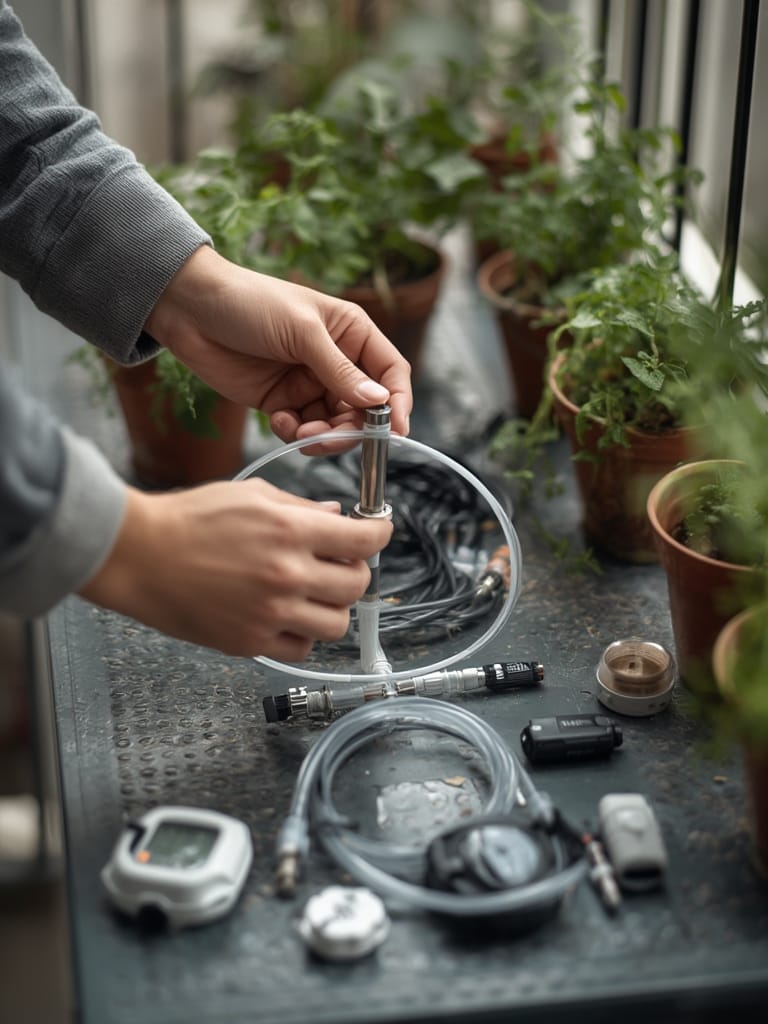
Modern smart kits add programmable schedules and even app notifications, similar to agentic AI automation in other home devices. For advanced users, look for systems with IoT sensors that track soil moisture sensors, temperature, and real-time water flow, just as you’d monitor a WiFi aquarium monitor or air purifier with a PM2.5 sensor.
If you want to integrate with voice assistants (like Alexa for your smart air fryer), confirm compatibility before you buy—many off-the-shelf kits lack this feature.
Common Pitfalls and What the Research Really Shows
Research from 2024 clearly supports the potential for water and cost savings, but also uncovers the most common barriers to successful drip irrigation in small-space applications:
- Initial Cost Barrier: Drip systems are cheap to run but costlier up front than hoses or hand-watering (kits typically $1.50 to $5 per linear foot of tubing).
- Installation Hassles: Over 50% of surveyed users cite installation and maintenance complexity as the main reason for avoiding drip systems, especially those new to container gardening.
- Maintenance Needs: Even though user reviews specific to balconies are rare, regular tasks like flushing lines and checking emitters prevent clogs and leaks—a common headache for agricultural users.
- Lack of Balcony-Specific Kits: Most “balcony” kits are repackaged garden products. If you have very few pots or an odd layout, you may end up with extra tubing or not enough emitters.
- No Solar-Powered Integration Data: Despite rising interest in solar-powered and “smart” irrigation, there’s no solid data on off-the-shelf solar kits for balconies in 2024. All major automation features—timers, IoT, app control—still require plugging in or using battery packs.
- No User-Focused Reviews: The user experience for patio and balcony applications (clogs, leaks, software glitches) is not well documented, so be prepared for some DIY troubleshooting.
| Feature/Challenge | Drip Irrigation | Manual Watering |
|---|---|---|
| Water Efficiency | 90-95% | 50-70% |
| Ongoing Cost | Low (after setup) | High (more waste) |
| Setup Difficulty | Moderate | None |
| Automation/Smart Features | Available via timers, sensors, apps | Not possible (manual labor required) |
| Typical Problems | Clogging, leaks, emission balancing | Uneven watering, over/underwatering |
According to Utah State University research, even a basic drip setup can cut water use by half or more, but will require some hands-on maintenance. For true automation and remote control, look for features like soil moisture sensors and cloud-based scheduling just as you might on a Matter-compatible device for smart homes.
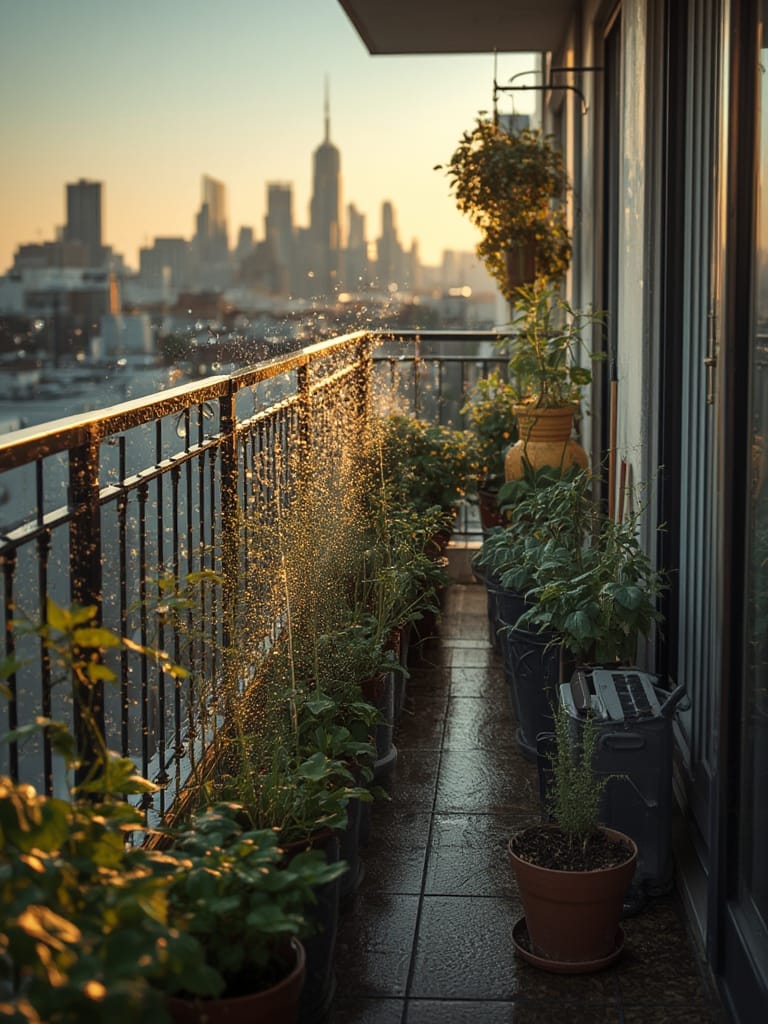
For a deep-dive into technical specs or smart automation, many systems mimic features seen in AI ovens and other predictive automation gadgets—real-time weather data, programmable intervals, and mobile app connectivity—but solar options are largely missing in 2024 consumer catalogs.
Conclusion
In summary, Drip Irrigation offers the most water-efficient and cost-effective way to maintain healthy patio or balcony plants—provided you plan for startup costs and basic maintenance. With the right kit and a bit of setup, you can automate watering, reduce waste by up to 60%, and avoid many hassles of daily hand-watering. If smart features matter to you, double-check compatibility and sensor options. Ready to overhaul your balcony or patio setup? Research thoroughly, compare features, and make your small space an oasis with drip irrigation this year.
Take the first step now—plan your drip irrigation setup and transform how you care for your balcony garden!
FAQ
How much water does drip irrigation actually save on a balcony?
On balconies and patios, drip irrigation can reduce water use by up to 60% compared to hand-watering, according to recent research. This is because water is delivered right to the root zone, limiting evaporation and runoff.
What is the average cost of setting up a basic balcony drip irrigation kit?
Pricing varies, but expect to pay $1.50 to $5 per foot of tubing for high-quality kits. While agricultural drip systems run $500–$1,200 per acre, a basic balcony kit with a timer is usually under $75 for 10–20 pots.
Are there any downsides to using drip irrigation on patios or balconies?
The main downsides are the initial installation cost, potential emitter clogs, and having to learn basic maintenance. Balcony-specific kits are also rare, so you might need to adapt a garden kit.
Can smart drip systems run on solar power?
Most consumer systems still require standard power sources. While solar-powered drip irrigation is common in agriculture, there’s no solid 2024 data on affordable, balcony-sized solar kits with smart controllers or sensors.
What smart features really matter for drip irrigation in small spaces?
Timers, adjustable emitters, and soil moisture sensors have the biggest impact. App integration and IoT sensors enable remote scheduling and data-driven watering, greatly reducing human error and plant stress.