

Pet Face ID is quietly changing how pet owners secure their homes and give their animals freedom. Instead of relying on collars or microchips, this new technology uses your pet’s face to let them in and out—just like Face ID unlocks your phone. But is it the real solution for every pet owner?
Key Takeaways
- Pet Face ID is a biometric technology that uses facial recognition instead of collars or chips to control pet door access.
- Lack of real-world adoption data and transparency on performance metrics is a significant concern in the current Pet Face ID market.
- Owners must weigh costs, privacy risks, and practical limitations before switching from traditional pet door solutions.
- What Is Pet Face ID? How It Works and Why It’s Trending
- Step-by-Step Guide to Setting Up Pet Face ID at Home
- Advanced Analysis & Common Pitfalls: What To Know Before You Buy
- Conclusion
- FAQ
What Is Pet Face ID? How It Works and Why It’s Trending
Pet Face ID is a contactless biometric security system for pets. Instead of using RFID-enabled collars or embedding a microchip, you train a connected camera (often built into a pet door or access panel) to recognize your dog or cat’s unique features. When the pet approaches, the device scans their face and unlocks the door only for recognized animals.
Why now? The broader pet technology market is exploding, projected to surpass USD 118 billion by 2033. Owners want smarter, hands-off ways to monitor and protect their animals. The appeal of Pet Face ID includes:
- No more lost/tagless collars or malfunctioning chips
- Non-invasive—no need for surgery or radiation from chips
- Potentially fewer “false unlocks” by neighborhood strays
Early adopters are often the same owners looking for pet cameras with advanced features, or those exploring anxiety relief with anxiety vests for their dogs. In theory, any home that already values smart security and automation (see also the Matter Protocol for device compatibility) is likely to consider Pet Face ID for pets.
Step-by-Step Guide to Setting Up Pet Face ID at Home
If you’re ready to try Pet Face ID, here’s a practical, step-by-step approach—because vendor guides are still scarce and not all systems work equally well:
- Pick the Right Device: Choose a pet door or camera system with explicit facial recognition for animals. Check user reviews or direct videos for your pet’s breed or size. You may find that cats are less reliably recognized than dogs. Ask about firmware update frequency and customer support.
- Camera Placement & Installation: Install the camera at the pet’s head height, on the approach side of the door. Ensure there is consistent lighting. If outdoors, pick a product with rain protection and a heater (for cold climates).
- Initial Face Enrollment: Use the device’s app to take multiple clear photos of your pet’s face from various angles. Most systems need at least 3–5 angles. Patience is key—offer treats and keep your pet calm. Save your photos and test recognition before enabling auto-unlock.
- Testing & Training: Practice approaches in different conditions (day, night, after a walk). Observe the door’s response. Tweak facial data if you get misreads—some systems let you add new photos over time.
- Set Up Backup Access: If the system malfunctions (e.g. during a power failure), have a physical key, remote unlock via app, or an override PIN ready. Never rely solely on Face ID for critical pet entry/exit.
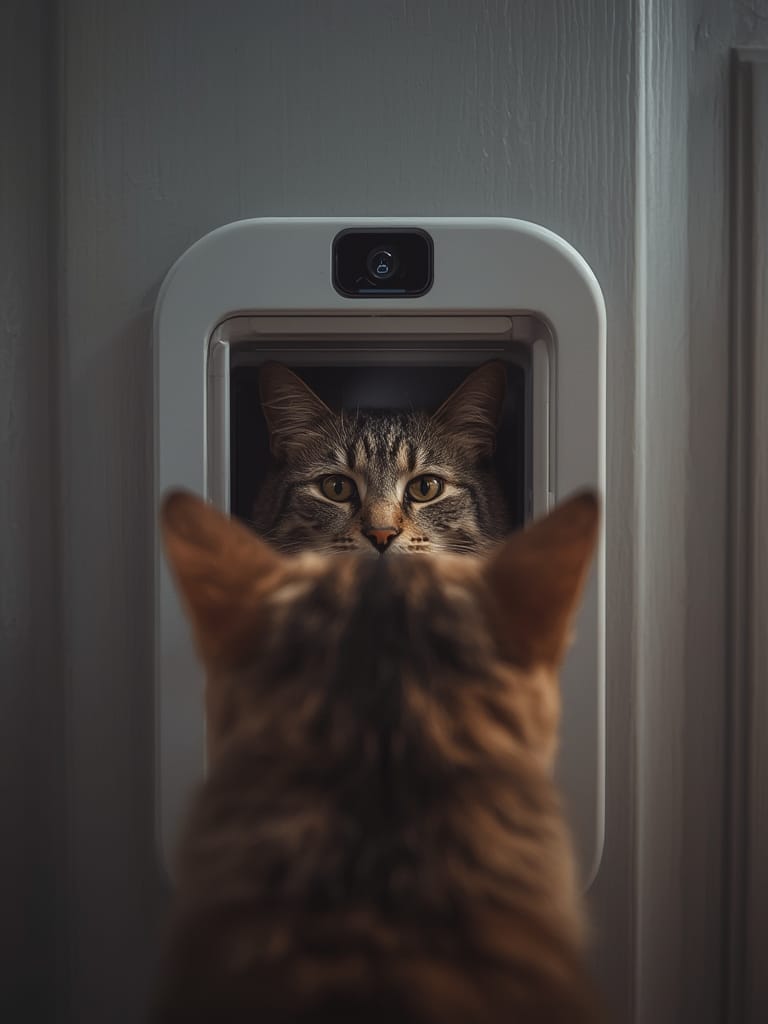
- Integrate with Your Smart Home: Some advanced Face ID doors support smart home triggers. You can set up notifications, switch on lights when your pet enters, or connect to smart cameras for video logging—useful if you’re already using agentic AI for predictive routines.
- Monitor Firmware and Security: Enable automatic software updates. Disable remote access over the internet unless you need it daily. Secure your Wi-Fi and use long, unique passwords for the device account.
Advanced Analysis & Common Pitfalls: What To Know Before You Buy
Pet Face ID is an impressive idea—but the current market is full of gaps in transparency. Here’s what to realistically expect:
| Feature | Pet Face ID | Microchip/Collar Door |
|---|---|---|
| Adoption Data | No public stats (pet tech market growing) | Widely adopted, proven |
| Accuracy | No comparative data; affected by lighting/fur/angle | Near 100% if tag/chip present |
| Cost | Unknown; likely higher upfront/maintenance | $100–$250, mostly one-time |
| Privacy | Biometric data may be stored offsite, subject to privacy regulations (GDPR influences industry) | No personal data stored |
| Reliability During Power Outage | Unreliable unless backup battery-equipped | Often mechanical override |
Based on available market research, smart pet tags and pet wearables are enjoying strong growth. But for Pet Face ID specifically, real-world performance data—such as accuracy across dog breeds, or in low light—is not being disclosed by makers. Until peer-reviewed studies or manufacturer claims are routinely published, consider Pet Face ID a “beta” technology.
- Privacy Risks: Unlike a simple collar, facial data could be stored in the cloud. If you’re concerned about privacy, contact the manufacturer to ask about their retention policies, opt-outs, and compliance with laws like GDPR.
- Installation Challenges: Getting the correct view angle and avoiding sun glare (or nighttime shadows) is harder than you think. Expect trial and error—especially if your pet is dark-furred or rarely sits still.
- Return on Investment: There is no public data yet justifying higher cost compared to proven chip or tag-based doors. If your household needs more health-focused tracking, consider a dedicated health collar instead.
Finally, don’t overlook simple mechanical failure—motors can jam or cameras can fog up in poor weather. Keep backup entry options for your pets, and test your system regularly.
Conclusion
Pet Face ID promises a future of hands-off pet access and advanced automation, but the lack of robust, transparent data means early adopters are taking a risk. Owners must weigh potential privacy issues, high up-front costs, and the day-to-day reality of technical glitches. If peace of mind and ultimate smart home integration are your goals, Pet Face ID is worth exploring—but keep your expectations realistic and have a backup plan.
If you’re interested in other smart pet tech, check out guides on interactive laser toys or app-controlled cooling bowls for extra convenience. For now, treat Pet Face ID as part of a blend, not a total replacement. Ready to try it? Assess your needs, compare devices critically, and never put your pet’s safety on autopilot.
FAQ
Does Pet Face ID work for both dogs and cats?
Most Pet Face ID systems claim to support both species, but facial recognition tends to be less accurate for cats, especially those with darker fur or unique facial features. Always check device reviews for your animal type before purchase.
What happens if the camera can’t recognize my pet?
If recognition fails, most doors will stay locked. This is why it’s essential to set up a backup access method—like an override code or remote unlock—especially if you’re away from home.
Is Pet Face ID secure? Who stores my pet’s facial data?
Security varies by brand. Some systems store your enrollment data locally, others on external servers. Only buy from vendors that publish data security policies and comply with privacy laws—request specifics before installing.
How much does Pet Face ID cost compared to other smart pet doors?
Pricing is unclear as of 2024, but expect Pet Face ID doors to cost more than basic chip-based doors. Installation and potential subscription fees can increase total ownership costs. Request a full price list, including maintenance, before committing.
Can Pet Face ID be integrated into a smart home system?
Some advanced models support integration with smart home platforms or routines, especially using protocols like Matter. Confirm platform compatibility before purchase to avoid future headaches.