

Mold Monitor technology has become essential for protecting your home, health, and wallet. Undetected mold doesn’t just cause bad smells or ugly spots—it can trigger severe health issues and dramatically lower your home’s value. Yet, finding the right way to detect and prevent mold isn’t as straightforward as most homeowners expect.
Key Takeaways
- Mold exposure is common in US homes and can lead to severe health and financial costs.
- Using a reliable mold monitor is the most proactive way to catch issues early and reduce risk.
- Smart mold monitoring can be combined with other technologies for a holistic, connected home defense.
- What Is a Mold Monitor and Why You Need One
- Step-by-Step: How to Use a Mold Monitor in Your Home
- Advanced Analysis and Common Pitfalls
- Conclusion
- Frequently Asked Questions
What Is a Mold Monitor and Why You Need One
A mold monitor is a device or sensor system that tracks humidity, temperature, and sometimes airborne particles in your home to detect conditions where mold can thrive. Mold is not just unsightly; nearly half of residential buildings in the US contain mold or dampness, and about two-thirds of Americans have dealt with mold at home at some point[source]. Mold exposure is linked to chronic asthma, allergic reactions, and even severe organ complications. Financially, a visible mold issue can knock 20% or more off your home’s market value—a $99,000+ loss for the average house[source].

Most homeowners are unaware that severe mold growth often starts in hidden areas, like behind walls, under floors, or in basements—long before visible signs appear. By the time you see or smell mold, the problem has often become expensive and complicated. A mold monitor gives you a chance to catch these early warning signs, keep your air safe to breathe, and avoid huge remediation costs.
Modern mold monitors can be integrated into smart home setups, working alongside air purifier monitors, Matter compatible devices lists, and even predictive home automation tools. This lets you automate air quality improvements or moisture control across your entire living space.
Step-by-Step: How to Use a Mold Monitor in Your Home
Installing a mold monitor isn’t complicated, but getting the most value out of it requires some planning. Here’s a practical guide.
- Evaluate Risk Zones. Start by identifying areas in your home with consistent moisture: bathrooms, basements, crawlspaces, attics, and kitchens. Research shows that 3% of US homes have regular indoor mold exposure[source].
- Choose Compatible Mold Monitors. If you already use a smart home hub—like a Matter protocol device—look for monitors that can share alerts with your phone or trigger dehumidifiers automatically.
- Install and Connect. Follow the instructions for wall mounting or shelf placement. Make sure your monitor is level and not blocked by clutter or curtains. Pair your mold monitor with your home WiFi, Zigbee, or Matter-compatible hub as needed.
- Set Up Alerts and Automations. Enable notifications for when humidity or temperature exceed safe thresholds (typically >60% relative humidity, or a persistent warm/cool spot on an interior wall). With smart integration, you can trigger an air purifier’s auto mode or a fan to improve ventilation.
- Test with Simulated Events. After setup, artificially introduce moisture—such as running a hot shower with the exhaust fan off. Watch for real-time alerts. Address any weak signals or dead zones by repositioning the sensors or adding mesh network extenders.
- Maintain and Check Annually. Replace batteries or clean sensors as specified in your device manual. Schedule yearly reviews to ensure continuous monitoring and update smart home routines as your needs change.
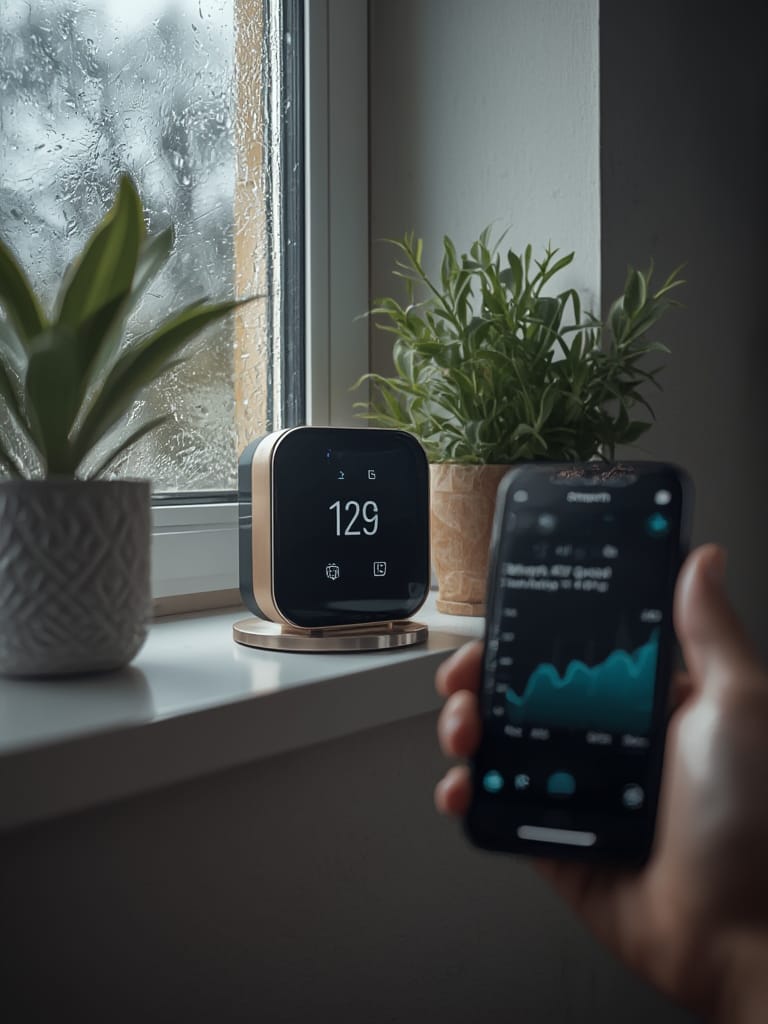
If you already use an aquarium monitor for humidity or a smart air fryer with app control in your kitchen, you can often add mold monitoring to your routines for an end-to-end smart home defense.
Mold monitors are particularly critical after severe weather. If you’ve experienced flooding or leaking, start monitoring immediately—mold growth can take hold in as little as 24 to 48 hours[source].
Advanced Analysis and Common Pitfalls
Getting a mold monitor is a smart decision, but there are several caveats and technical limitations that are often overlooked. Let’s dig into where these solutions help—and where they can fall short.
| Detection Method | Pros | Cons |
|---|---|---|
| Commercial Mold Monitors | Easy setup, real-time alerts, smart home integration, tracks trends over time | Typically measure only risk (humidity/temp), not actual spores; upfront cost; some need subscriptions |
| DIY Spore Trap Kits | Directly measure mold spores, can identify type of mold, low initial cost | No real-time alerts, requires lab processing, time lag for results, can be confusing for non-experts |
- False Sense of Security: Most residential mold monitors track humidity, not spores. While high humidity is a leading indicator, you won’t get a definitive mold warning until levels are already risky.
- Placement Errors: Putting sensors in the wrong spot—like near a window or HVAC vent—may result in inaccurate readings or missed early warnings.
- Maintenance Neglect: Dead batteries, clogged sensors, and ignored software updates leave you vulnerable. Like any home tech, mold monitors need annual checks.
- Smart Integration Gaps: Not all products support advanced automations. If your monitor can’t talk to your dehumidifier, it’s just reporting a problem, not helping you fix it in real time. Look for systems with open protocols or Matter compatibility for easiest integration.
- Cost Surprises: Besides initial purchase, some brands require paid cloud storage or advanced analytic subscriptions. Maintenance costs are rarely advertised up front.

Another overlooked risk is disaster recovery. After flooding, mold risk skyrockets. Yet, most homeowners don’t realize that mold can grow dangerously in hidden cavities within 24 to 48 hours[source]. This is why combining a mold monitor with a smart leak valve or energy dashboard for dehumidification control is so effective. There are also accessibility gaps in current educational content—users often confuse basic humidity sensors with true mold monitors, missing out on advanced features or automation possibilities.
Conclusion
An actionable mold monitor setup is a cost-effective, proactive way to protect your home’s air quality and value. Ignoring indoor humidity is no longer an option—with millions affected each year, the risk is both personal and financial. To get the best defense, start with a reliable mold monitor, keep sensors well maintained, and integrate with smart home controls where possible. Don’t wait until you see or smell mold—by then it’s too late. Take control today and defend your home with a mold monitor before health or wallet takes a hit.
Frequently Asked Questions
What does a mold monitor actually do?
A mold monitor tracks indoor humidity, temperature, and sometimes airborne particles to identify when conditions are right for mold growth. Advanced models can send alerts to your phone or trigger ventilation devices automatically.
Can a mold monitor detect existing hidden mold?
Most home devices detect risk conditions, not actual spores. To confirm hidden mold, consider combining risk monitoring with periodic spore test kits or professional inspection.
Where should I place my mold monitor sensors?
Focus on bathrooms, basements, laundry rooms, crawl spaces, and areas near water pipes or past leaks. Avoid placing sensors right by vents or windows for most accurate readings.
Do mold monitors require internet or smart home integration?
Many can work standalone with onboard alerts, but connecting to WiFi or smart home hubs enables advanced features like remote alerts, automations, and trend tracking.
Are there recurring costs for mold monitors?
Some brands require subscriptions for cloud analytics or advanced alerts. Even without a subscription, plan for periodic battery replacements or calibration as per manufacturer advice.