

Auto Litter Box technology is transforming the daily lives of cat owners by automating one of the least pleasant chores: cleaning the litter box. With smart features and rising adoption rates, these devices save time and help maintain a cleaner home. But are they really worth it? Let’s dig in.
Key Takeaways
- Auto litter boxes offer time-saving convenience but bring trade-offs in cost, reliability, and adaptation by some cats.
- The global market is set for strong growth, with North America leading adoption rates and new features emphasizing connectivity and health monitoring.
- Users should understand common pitfalls and practical setup tips before investing.
- The Core Concept: What Is an Auto Litter Box and Why Upgrade?
- Step-by-Step Guide: Setting Up and Using an Auto Litter Box
- Advanced Analysis & Common Pitfalls: Real Problems, Market Data, and Workarounds
- Conclusion
- FAQ
The Core Concept: What Is an Auto Litter Box and Why Upgrade?
An auto litter box (automatic self-cleaning litter box) detects when your cat uses it and automatically removes waste to a hidden compartment. Most use gravity-based sensors and rolling, raking, or sifting mechanisms. This “set and forget” approach appeals to busy professionals, multi-pet households, and anyone seeking less mess and fewer odors at home.
The global market for auto litter boxes was valued at USD 559.3 million in 2024 and could reach nearly USD 869.6 million by 2030. North America leads the trend (up to 40% market share), driven by pet owners prioritizing hygiene and time efficiency.
Beyond convenience, some models offer health tracking to detect if your cat is using the box less often—a possible sign of urinary health issues. App connectivity allows you to monitor activity or get reminders, fitting right alongside smart appliances like AI Ovens and app-controlled air fryers.
Still, not all units are created equal, and even top-rated brands come with caveats. To make the most of these devices, it’s essential to set them up thoughtfully and manage realistic expectations.
Step-by-Step Guide: Setting Up and Using an Auto Litter Box
Here’s a hands-on guide for integrating an auto litter box into your home with the least stress—both for you and your cat.
- Choose the Right Model
Review unit size, sensor style (weight, infrared, gravity), and whether the litter box offers health tracking. Multi-cat households should prioritize units with large waste bins and proven odor control technology. - Site Your Box Properly
Place the device in a quiet, low-traffic spot—ideally not beside their food or water (cats instinctively avoid eliminating near resources). For open-concept homes, consider enclosed models for better odor control. For detailed air quality strategies, check reviews of air purifiers for pets. - Prepare and Transition
Remove the old box only once your cat reliably uses the new one. Some cats need days (or weeks) before accepting the device, especially if it’s noisy or prone to unexpected cycles. - Set Up Connectivity
Use the included app and link to your Wi-Fi. Most leading models let you schedule cleanings, receive alerts, and track your cat’s visits. These features mirror modern automations—see inspiration with agentic AI for smart homes. - Maintain Consistency
Although labeled self-cleaning, you’ll need to empty the waste drawer, top up litter, and wipe down surfaces weekly. This step is critical for odor prevention, as even leading odor-control features can’t mask total neglect.
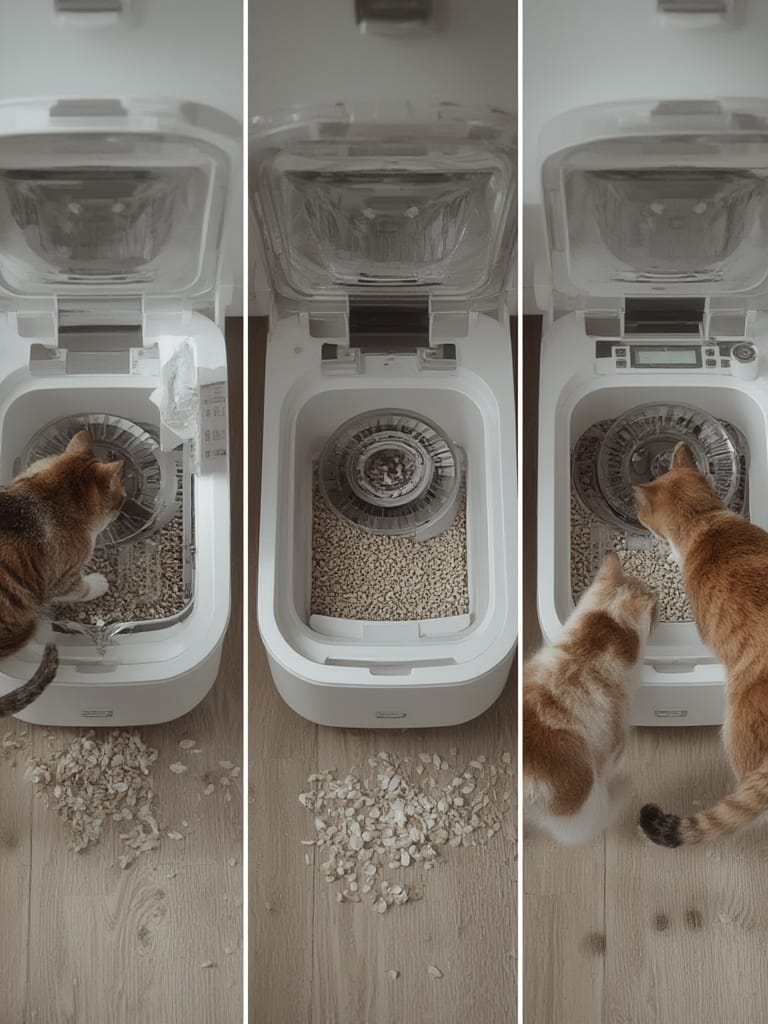
Want added peace of mind? Use the smartphone app’s history of entries to spot changes in your cat’s elimination pattern, a health hack similar to utilizing a wifi aquarium monitor for tracking sensitive aquatic pets.
For tailored success, don’t skip initial monitoring—some cats will always need extra encouragement. If your auto box has replaceable odor filters or liners, set a reminder to change them every few weeks (or as recommended).
Advanced Analysis & Common Pitfalls: Real Problems, Market Data, and Workarounds
While auto litter boxes promise huge convenience gains, they aren’t flawless. Here’s what real-world data and user experience tell us about common pitfalls and practical solutions.
User-Reported Pain Points & Device Limitations
- High Initial Cost: Premium units, especially models with Wi-Fi and health-tracking, can cost several hundred dollars upfront.
- Ongoing Maintenance: While branded “self-cleaning,” all auto litter boxes require regular emptying, re-filling, and parts maintenance. Consumables (like special liners or filters) add long-term costs.
- Odor Control Is Not Perfect: Even the latest odor-control systems aren’t failproof. If the waste isn’t emptied regularly, odors build up. For advanced air management, complement your setup with a PM2.5-monitoring air purifier.
- Compatibility Issues: Some cats fear the noise or movement of auto boxes and may avoid using them. Multiple transition attempts or experimenting with different models may be necessary.
- Malfunctions/Breakdowns: Jams, failing sensors, and app glitches do happen, especially after extended use or with bargain-tier models.
Real Market Data: Adoption, Growth & Competition
| Region | Market Share | Market Value (2024) | CAGR Projection |
|---|---|---|---|
| North America | 37-40% | USD 245.8 million | 6.4-6.7% |
| Europe | 30% | USD 184.35 million | 6.7% |
| Asia Pacific | 23% | USD 141.34 million | 10.2% |
| Latin America | 5% | USD 30.73 million | 7.6% |
| Mid East & Africa | 2% | USD 12.29 million | 7.9% |
The global market values range drastically depending on methodology, but all forecasts agree on sustained growth, especially in markets with high demand for time-saving smart devices.
Technical Features and Design Variations
Most self-cleaning models now tout features such as gravity-activated sensors, quiet sifting motors (like “QuietSift”), and Wi-Fi/app connectivity. PetSafe and Litter-Robot brands also add health monitoring to alert owners about potential urinary issues, but cheaper units may lack reliability. For a list of interoperable home tech, see Matter-compatible devices.
Design trade-offs persist. Enclosed models help with odor but can intimidate large or timid cats. Open-top designs are more approachable but less effective at containing smells. Eco-friendly materials and smart odor-absorbing tech are emerging but still lack independent, scientific, peer-reviewed validation, according to market research.
In summary: auto litter boxes can be a game changer, but expect an investment of time and money upfront—and don’t expect to be 100% hands-off.
Conclusion
Auto litter boxes simplify pet care for busy cat owners and introduce new smart home tech into daily routines. As with any automation, they come with limitations: notable startup costs, required maintenance, and the occasional finicky feline. Still, for many, the benefits outweigh the effort—especially if you apply the setup tips above. If you’re considering bringing an Auto Litter Box into your home, weigh your options, compare features, and plan a thoughtful transition for your cat.
Ready to reclaim your time and try the next level of pet care? Review top rated models, connect them with your broader smart home setup, and join the millions making cat ownership cleaner and simpler.
FAQ
Are auto litter boxes truly maintenance-free?
No. You will still need to empty the waste compartment, refill the litter, and clean the device on a regular basis. Auto litter boxes dramatically reduce daily scooping but are not completely hands-off.
Will all cats use an automatic litter box?
No. Some cats are startled by the movement or sounds. It helps to gradually transition, but there is always a chance some cats simply will not adapt.
Do auto litter boxes eliminate odors?
Most top brands offer improved odor control, but if you fail to empty the waste tray or maintain the device, odors can become noticeable. For sensitive noses, combining with an air purifier helps.
What features should I look for when comparing auto litter box models?
Consider waste capacity, sensor type, noise level, Wi-Fi or app connectivity, health tracking, compatibility with your preferred litter, and warranty support. Multi-cat options and odor control filters are often worth the premium.
How do auto litter boxes fit into a smart home?
Many modern models offer app integration, usage notifications, and may share data with other devices. This aligns with trends like predictive home automation and remote pet monitoring—see more in our coverage of agentic AI.