

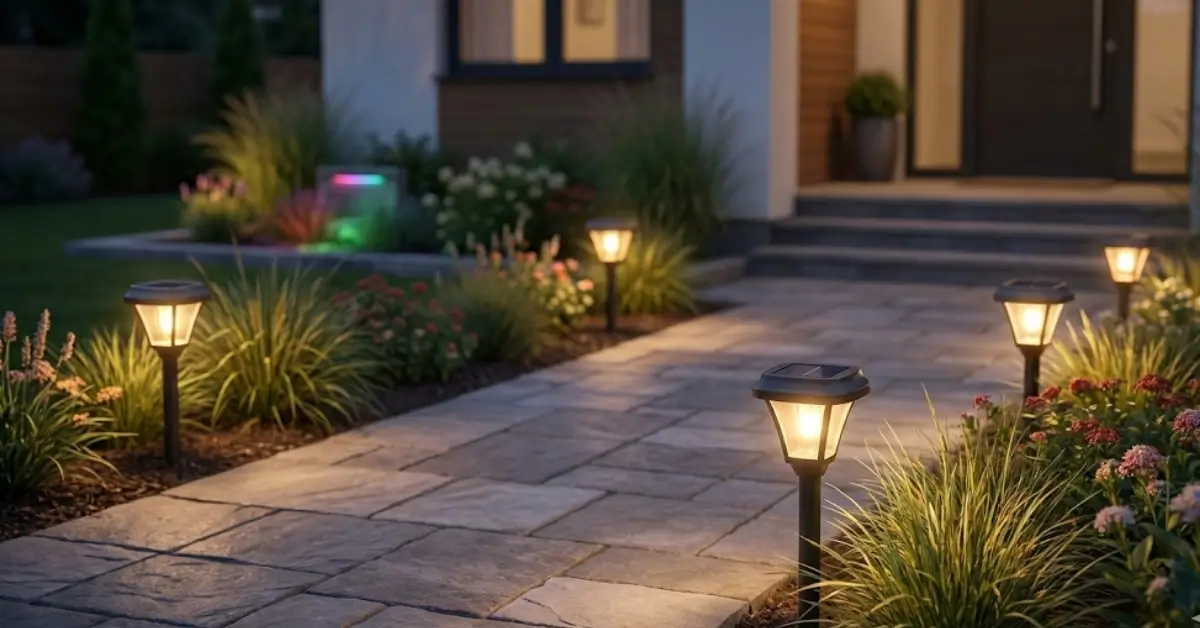
Solar Lights are reshaping how people light their gardens, pathways, and outdoor spaces in 2024. If you want a plug-free, energy-saving way to illuminate your yard or boost curb appeal, solar landscape lighting offers new options—especially with smart, colorful (RGB) lights and app controls replacing old-school fixtures.
Key Takeaways
- The global outdoor solar LED market is surging, expected to quadruple between 2024 and 2030, with solar garden LED lights as its fastest-growing segment.
- Most solar smart lighting still lags in smart home integrations (like Alexa or Google Home), app reliability, and RGB-specific features.
- Installation is easy for most models, but battery life, weather resilience, and connectivity issues are common user frustrations.
- What Are Solar Lights and Why Go Smart?
- How to Set Up Smart Solar Path and Garden Lights
- Analysis & Pitfalls: What Market Data and Real Users Reveal
- Conclusion
- FAQ
What Are Solar Lights and Why Go Smart?
Solar lights use small photovoltaic (PV) cells to convert sunlight into power, storing that energy in internal batteries for nighttime use. The new wave—smart smart solar path lights and RGB solar garden lights—adds wireless control, scheduling, and even color-changing features without running electrical wires outside.
This tech is popular for a few reasons:
- Simple DIY installation (no trenching or cables required for most units).
- Lower energy bills—sun provides the power, free of charge.
- Now with remote control via mobile apps or, in best cases, smart home assistants.
- Many models offer not just “on/off,” but dimming, scheduling, and color options (RGB) for garden décor or events.
Market momentum is strong—solar LED outdoor lighting hit USD 9.8 billion in 2024 and may reach USD 41 billion by 2030, paced by surging demand for solar garden path lights and residential landscape solutions (source).
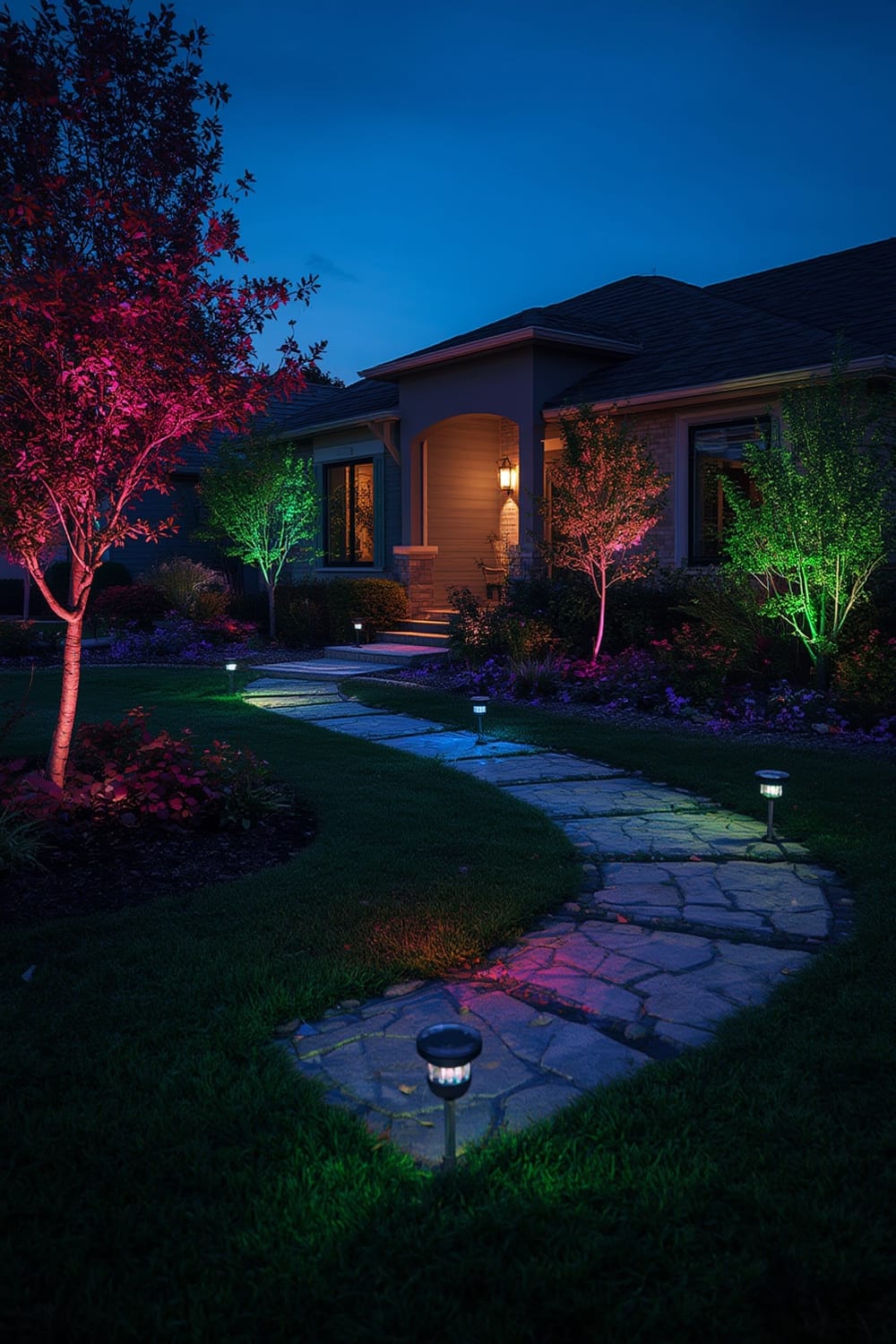
But even as features expand, new pain points appear—especially for RGB and “smart” options—around app reliability, weather resilience, and integration with systems like Alexa, Google Home, or new standards like Matter protocol.
How to Set Up Smart Solar Path and Garden Lights
You can install solar lights in one afternoon. Here’s a practical process for app-controlled models (including RGB color-changing units):
- Plan Placement. Map your path, garden, or patio. Pick sunny spots—shade drops performance. For consistent effects, measure the distance between each fixture.
- Prepare the Ground. For pathway lights, clear debris and dig small holes for spikes. For garden uplights, consider a base to stabilize on mulch.
- Assemble and Test Light Units. Remove all packing stickers covering solar cells. Snap together ground stakes or mounting parts, then place the lights in full sun for 1-2 days. Test the “manual override” button—does each unit turn on/off?
- Connect to App or Controller. Download the manufacturer’s app. For Bluetooth models, get close to each unit (5–10 feet is usually plenty). For Wi-Fi-enabled lights, connect to your home’s 2.4GHz network. Run pairing mode—some require pressing a sync button or scanning a QR code.
- Name, Group, and Configure Scenes. Assign each light a unique name/location. Set schedules, brightness, colors (if RGB), or motion-activated routines as your app allows.
- Mount or Stake the Lights. Fully insert stakes or mounts in soil or soft ground. If mounting to a wall, use provided anchors and be mindful of solar panel exposure.
- Test Coverage at Night. Review light spread after sunset. Adjust angles, spacing, and color settings for optimal effect.
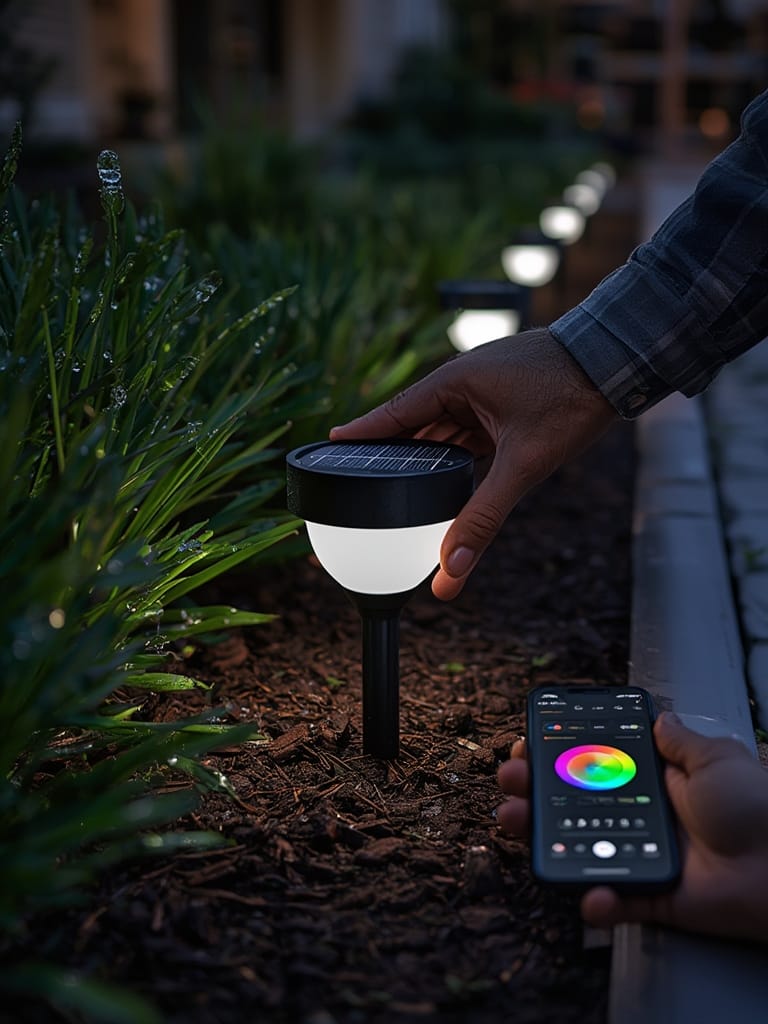
Consider connecting your solar lights with sensors like a presence sensor or soil sensor for advanced automation. It’s also worth exploring if your brand offers Matter compatible devices for smoother smart home integration.
Analysis & Pitfalls: What Market Data and Real Users Reveal
Even as adoption rises rapidly, the solar smart lighting category reveals some clear challenges and gaps:
- Integration Gaps: Most solar path/garden lights do not offer reliable Alexa, Google Home, or HomeKit support. The Matter protocol aims to solve this, but many “smart” solar options remain app-only or require bridges.
- App & Connectivity Limitations: Wi-Fi models often limit themselves to the 2.4GHz band (not compatible with 5GHz). Bluetooth range caps at 30 feet or less. Pairing bugs and “offline” devices are frequent complaints (when reported).
- Dimming, Scenes, and Color Control: RGB color customization is inconsistent—some have only 8–16 presets, while others allow full color wheels. Many models lack rich scheduling or group control. If color accuracy matters, shop carefully or look for lab-tested reviews (rare as of 2024).
- Performance in Bad Weather: Look for IP65 or higher ratings for weather resilience. Cheap models may leak or degrade fast. Reports show outdoor solar LEDs are growing thanks to improved durability, but real-world reviews still cite failures after hard freezes or downpours.
- Battery Life: Most solar garden lights run 6–10 hours on a full charge. Cloudy days or old batteries mean less time lit. Battery replacements are not always easy—factor this into purchase decisions. If you’re looking to extend battery life, consider high-capacity rechargeable batteries for your solar lights.
- Upfront vs. Ongoing Cost: Complete RGB/app-controlled solar kits are typically cheaper than Philips Hue outdoor (which require wired power plus Hue Bridge), but no study gives real average cost or lifespan. Ongoing costs are minimal if batteries are reliable and panels aren’t easily damaged.
- No Precise User Review Data: There’s a lack of third-party lab and “real user” data on critical pain points—like app glitches, install confusion, or color fading. Look for reviews that document a season or two of use, not just unboxing impressions.
Here’s a side-by-side look at solar lights vs. traditional wired/RGB and Philips Hue landscape lighting:
| Feature | Smart Solar Lights | Philips Hue Outdoor | Traditional Wired |
|---|---|---|---|
| Power Source | Solar PV + battery | Wired (AC-powered) | Wired (AC-powered) |
| App/Voice Control | App (brand-specific); few offer Alexa/Google Home | Full (Alexa, Google, Apple HomeKit via Hue Bridge) | Rarely app-controlled |
| Color Options (RGB) | Varies by model; many only basic color choices | Full RGB spectrum & scenes | Limited or single color |
| Installation | DIY, no wiring | Wiring and hub setup required | Wiring/trenching needed |
| Weather Resistance | IP65+ (good, but inspect ratings) | High | High |
| Battery Replacement | Usually possible, may be fiddly | Not applicable (wired) | Not applicable (wired) |
| Initial Cost (est.) | $$ | $$$ | Varies |
| Ongoing Costs | Low | Low-to-medium (if bridge required) | Low |
There’s no “one size fits all”—choose models with healthy user feedback, test in your own yard, and keep batteries/panels clean for best performance. If you want leading-edge integrations, look for brands adopting new Matter or IoT standards and monitor for firmware updates.
Conclusion
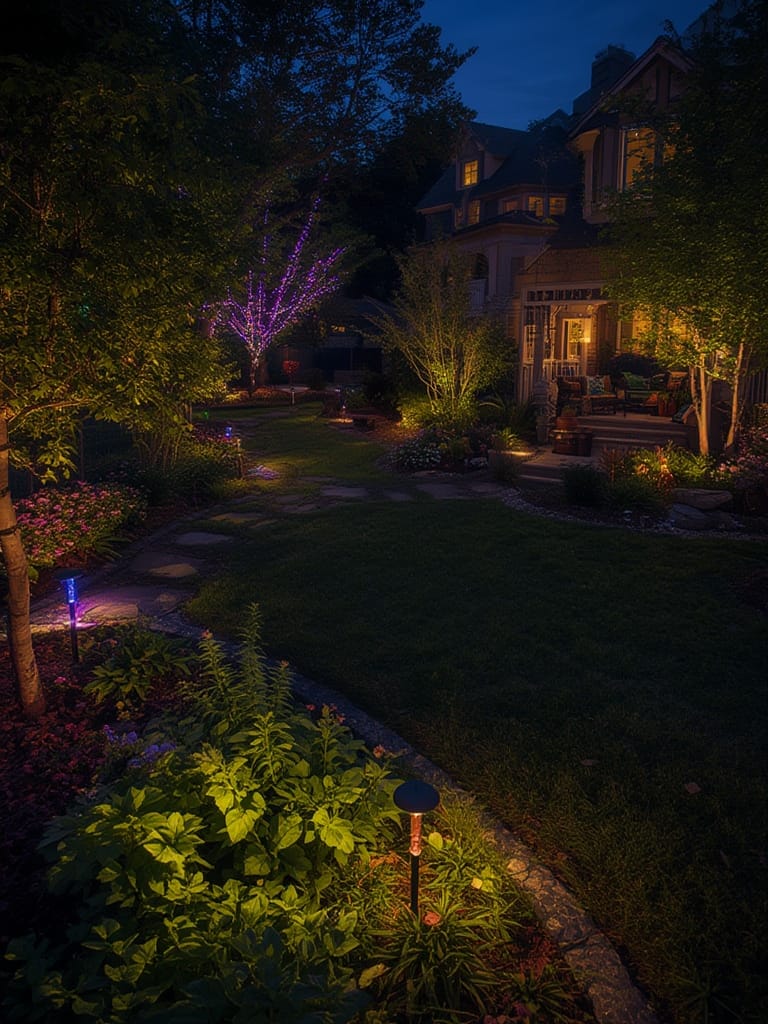
Solar lights bring energy-saving, wire-free convenience to outdoor lighting, and the new smart and RGB variants make your landscape lighting both functional and fun. But most models still lack rich integrations with existing smart home systems, and real-world battery life, weather resistance, and app quirks remain common issues. Ready to get started? Choose solar lights that best fit your needs and experiment—then level up your setup with advanced automations or integrations as the technology matures.
Curious about other smart outdoor trends? Explore how portable solar power stations or a soil sensor can complement your solar lighting, or learn about the Matter protocol that’s driving long-term compatibility across smart devices.
FAQ
Can solar lights really last all night?
On a full summer charge, most will stay bright 6-10 hours, but cloudy days, poor-quality solar panels, or failing batteries may shorten runtime. Cold weather also impacts performance.
Will my smart solar lights work with Alexa or Google Home?
Most do not natively—few app-based solar lights offer voice control or true Alexa/Google integration. Look for brands supporting new standards like Matter or check if their app allows routines using webhooks or IFTTT.
Are RGB/color-changing solar garden lights worth it?
They’re a fun upgrade for parties or mood lighting, but color accuracy and brightness can lag behind wired systems. Look for models with detailed color controls, and check for IP65+ weatherproof ratings.
What happens in winter or during long cloudy periods?
Performance will drop, with shorter runtime or lights sometimes failing to turn on entirely. Battery-powered units may require seasonal battery changes or repositioning for better sun exposure.
Can I automate my solar lights with other sensors or routines?
If your system supports integrations (via an app, Home Assistant, or Matter), yes! Combine with presence sensors, soil sensors, or smart scene controllers for advanced automation.