

Key Takeaways
- The global smart pet door market is forecasted to surpass $900 million by 2032, with app controlled and automatic sliding glass dog doors driving the growth.
- High upfront costs and compatibility issues are common obstacles for homeowners adopting smart door solutions.
- While smart doors offer tech-driven convenience, users should research insulation, backup power options, and app privacy before buying.
- What Is a Smart Door and Why Are Homeowners Switching?
- How to Choose and Install a Smart Door for Pets
- Smart Door Pitfalls and Real-World Challenges
- Conclusion
- Frequently Asked Questions
What Is a Smart Door and Why Are Homeowners Switching?
Smart doors for pets go far beyond a simple flap. They feature technologies like RFID sensors, microchip access, and app-based controls, allowing owners to manage when and how their pets can enter or exit. App controlled dog doors and automatic sliding glass dog doors, in particular, are booming — a natural result of homeowners seeking seamless integration with their overall Matter compatible devices list and smart home routines.
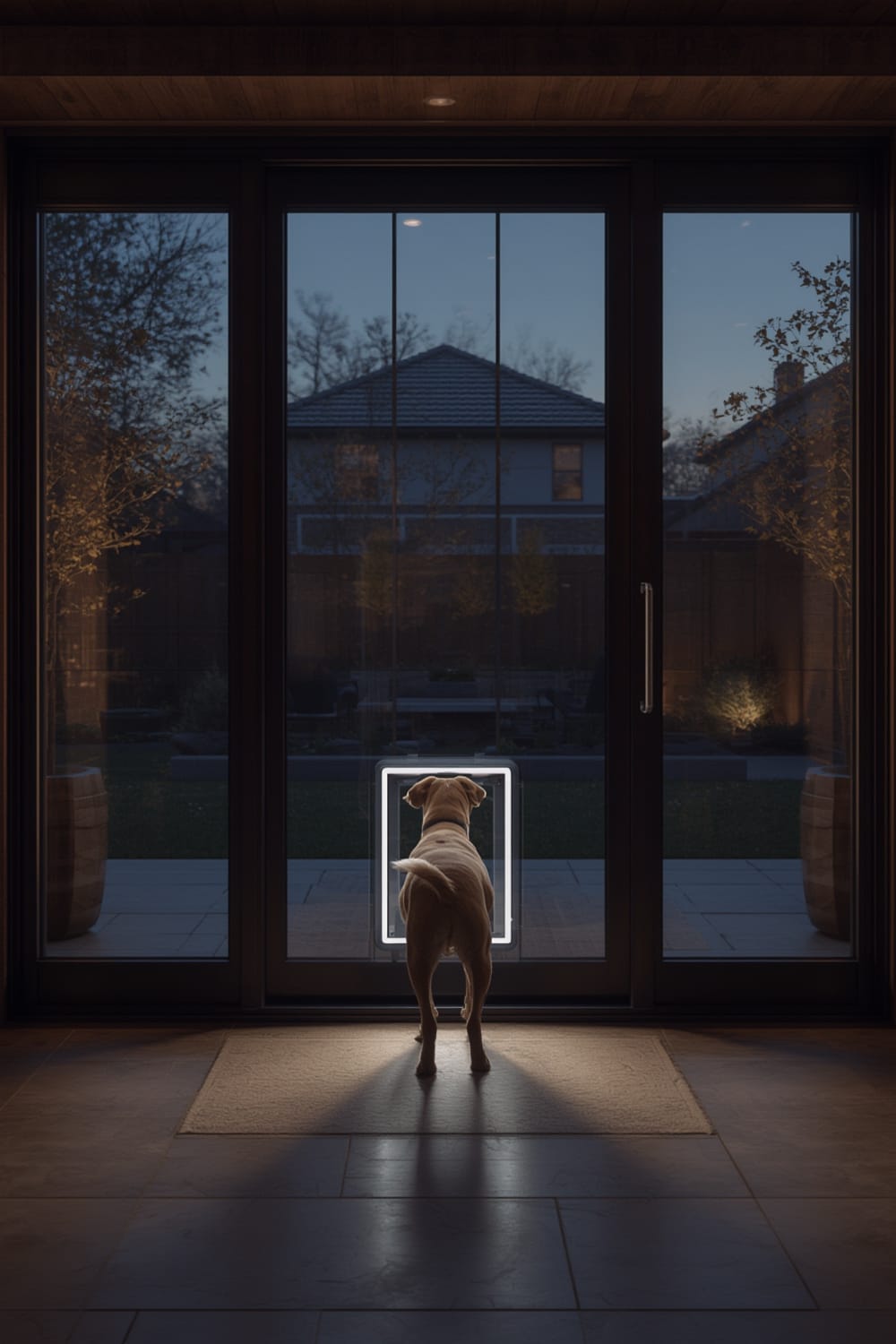
This surge is reflected in market statistics. In 2024, the smart pet door industry was valued between $346 million and $425.75 million, with projections reaching $733 million to $1.25 billion by 2033, at CAGR rates ranging from 10% to 14%. [source] [source] North America leads adoption, but trends show rapid growth in Europe and Asia Pacific due to higher pet ownership and the surge in smart home integration.
Many owners are drawn to smart doors for convenience: instant app notifications, configurable schedules, remote lock-down, and the potential for AI-driven features. Security, energy efficiency, and ability to support large dogs are also key reasons many are moving away from traditional pet flaps.
How to Choose and Install a Smart Door for Pets
Selecting and integrating a smart dog door is a significant upgrade for your home—but it requires careful planning to avoid frustration later. Here’s a proven step by step approach:
- Measure Your Pet and the Door Area: Ensure the smart door size fits your dog comfortably now and as it grows. For sliding doors, measure the available track width and height.
- Decide on Access Technology: Choose among microchip, RFID, Bluetooth, or app controls. Consider privacy and security needs (e.g., is Face ID or another secure smart lock integration like biometric lock options possible?).
- Research Insulation and Weatherproof Ratings: If you live in a cold or hot climate, energy-efficient features are crucial. Look for doors with double-pane construction or weather sealing. Even though direct insulation data is lacking, energy efficient and weatherproof designs are a growing trend [source].
- Verify Installation Requirements: Some smart doors are DIY-friendly, while others require professional installation—especially glass insert models. Factor in extra costs for fitting or potential app subscription fees (when available).
- Set Up Mobile App and Test Automation: Download the official app, pair it with the door, and create automation scenarios. Advanced users can connect to geofencing routines (much like the principles in Garage Controller setups) for seamless pet entry/exit based on your phone’s location.
- Train Your Pet with Positive Reinforcement: Use treats, toys, and patience. Enable audible chimes or lights during training mode and use features like schedule blocks to reinforce correct use.
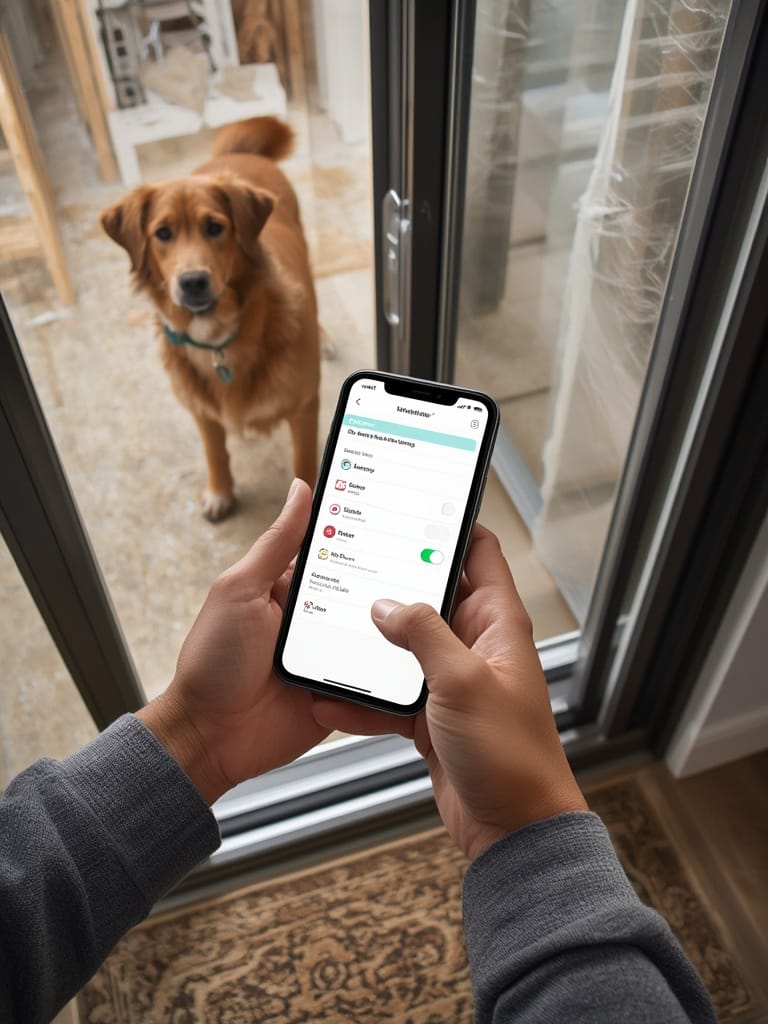
For more advanced automation, explore using occupancy and presence sensors (mmWave sensors) to trigger the door when your pet is waiting, or pair with “scene controllers” for easy manual override if something malfunctions. If your dog suffers from anxiety, pairing a smart anxiety vest for dogs with the door transition phase can reduce stress during the change.
Smart Door Pitfalls and Real-World Challenges
Only part of the story is glossy product photos. In reality, smart doors bring new issues—especially if you miss critical details during selection and setup. Here’s what buyers and existing owners repeatedly report as pain points:
- High Upfront Costs: Most smart dog doors, especially automatic sliding glass doors, start above $400, with professional installation sometimes doubling the investment. App subscriptions, if required, may add surprise running expenses, yet data on actual costs is scarce [source].
- Compatibility Frustrations: Many users buy the wrong model for their door style (e.g., out-swing vs in-swing vs slider) or find it doesn’t integrate with their smart home system. Matter protocol support is still emerging, but expected to become standard for future-proof installs (see full benefits of Matter protocol).
- Unclear Insulation Ratings: Few brands provide specific U-value or energy loss comparisons vs traditional flaps. Owners in cold climates complain about drafts and condensation.
- No Industry Standards for Security or Privacy: There’s little transparency around encryption, hacking prevention, or certifications. While “advanced security features” are mentioned in some regions, concrete details are rare [source]. Owners concerned about home protection should consider adding a mechanical privacy shutter or combining the door with a Face ID enabled lock.
- Unproven Emergency Reliability: There’s a lack of real-world backup solutions for power outages or app/device failures. Few models ship with a battery backup or manual override lever. Owners in outage-prone areas should ask manufacturers about failsafe modes before buying.
| Feature | Smart Pet Door | Traditional Pet Door |
|---|---|---|
| Controlled Access | Mobile app, microchip, RFID, AI routines | Physical flap, no selective entry |
| Energy Efficiency | Some have insulation, but data sparse | Generally poor, few with weather seals |
| Security | Lock-down mode, app logs, but certifications unclear | Easy for intruders/wildlife to bypass |
| Cost | $400-$1200+ (plus install/app) | $30-$200 (DIY) |
| Emergency Override | Rarely included | Always manual |
If you need advanced automation (for instance, to coordinate with a sleep tracking ring or robot mop routines), verify if the smart door integrates with your chosen ecosystem, or prioritize doors with open APIs for custom scripting.
Conclusion
Smart doors for pets are a leap forward in convenience and home integration, promising more freedom for your dogs and better security for your family. However, every solution comes with trade-offs like cost, installation complexity, and uncertainty around insulation and emergency backups. By focusing your research on genuine compatibility, energy efficiency, and real-world reliability, you’ll unlock the true benefits of a Smart Door—while sidestepping headaches. Ready to transform your home? Start by comparing which model supports your needs best.
Frequently Asked Questions
How much does a smart dog door actually cost, installed?
Expect to spend $400-$1200+ for the door and installation. Automatic sliding glass options usually cost more than wall or traditional door mounts. Factor in possible electrician or glass technician charges.
Can I integrate a smart pet door with my Amazon or Apple smart home?
If the door is Matter compatible, yes. Matter protocol solves cross-platform headaches and is becoming more common in 2025. Always check compatibility before buying.
How secure are app controlled dog doors?
Manufacturers promote advanced security (like lock schedules and app notifications), but concrete details on encryption or certifications are often lacking. Consider pairing with a Face ID lock for extra peace of mind.
What happens to smart pet doors during a power outage?
Most will fail closed unless a battery backup or manual override is included. Always ask the vendor beforehand and consider a battery generator for essential appliances.
Are smart pet doors energy efficient?
Some models offer weather sealing and double glazing, but insulation performance data is lacking. Look for North American or European brands highlighting energy efficiency as a core feature.