

Gutter Guard technology is transforming the way homeowners and facility managers tackle the dangerous, time-consuming chore of gutter cleaning. Today’s options include not just traditional mesh guards but also robot gutter cleaners and cleaning drones. So, what really works, and what are the real-world drawbacks? Here’s a no-nonsense, up-to-date guide on maximizing gutter protection and cleaning with modern tools—before you risk another ladder climb or overspend on tech that doesn’t deliver.
Key Takeaways
- Robot gutter cleaners reduce injury risk, but still struggle with wet debris, severe clogs, and can leave jobs incomplete.
- No silver bullet: Gutters with guards still accumulate debris and need regular inspection—automation helps, but maintenance isn’t zero.
- Costs vary widely and detailed pricing data is scarce—assume higher upfront investment for automation versus manual tools.
- The Core Concept: What Is a Gutter Guard and Why Modernize?
- Step-by-Step Guide: Maximizing Gutter Guard and Robot Cleaning Effectiveness
- Advanced Analysis & Common Pitfalls of Modern Gutter Cleaning
- Conclusion
- FAQ
The Core Concept: What Is a Gutter Guard and Why Modernize?
Gutter guards are engineered barriers—typically mesh screens or fin systems—that sit over your gutters and block leaves, twigs, and debris. Their core goal: reduce the frequency and danger of hands-on gutter cleaning while preserving proper drainage. Manual cleaning, especially with telescoping tools and ladders, leads to over 80,000 ladder injuries annually in the United States alone, making effective safeguards a safety imperative. Source
In the last decade, technology-driven solutions have entered the scene. Robot gutter cleaners and cleaning drones promise automation, hands-free cleaning, and—at least in part—automation of an unpleasant maintenance chore. As of 2024, the global robot gutter cleaner market has ballooned to $185 million, capturing 55% of its revenue from residential buyers and dominating North America with a 40% share.Source While effective at making cleaning safer and less labor-intensive, these tools do not eliminate all manual intervention nor guarantee complete debris removal in all scenarios.

Step-by-Step Guide: Maximizing Gutter Guard and Robot Cleaning Effectiveness
- Inspect for Guard Compatibility
Before investing in robot cleaners, confirm your gutter guard style (mesh, foam, brush, surface tension) is compatible. Some robots may not function with certain micromesh or raised-profile guards. - Schedule Regular Inspections
Even with guards or robots, visually inspect gutters twice per year. Small debris, pine needles, shingle grit, and seeds can still slip through guards or jam robots, undermining performance. - Clear Heavy Blockages Manually
Severe clogs or compacted, wet organic matter must often be dislodged by hand. Robots and drones frequently get stuck on wet leaf clumps or fail to pierce tough blockages. - Deploy Robots Only in Safe Weather
Robot cleaners perform best when gutters are dry and leaf matter loose. Running robots after heavy rain—or when leaves are mushy—leads to jamming or flip-overs, wasting both time and money.Source - Maintain and Upgrade
Regularly clean the robot’s brushes and tracks; software updates (for models featuring AI/IoT) can improve navigation and predictive maintenance. - Document & Evaluate Results
Take before-and-after photos and check downspout flow after each cleaning cycle. Make note of problem areas for targeted manual follow-up as needed.
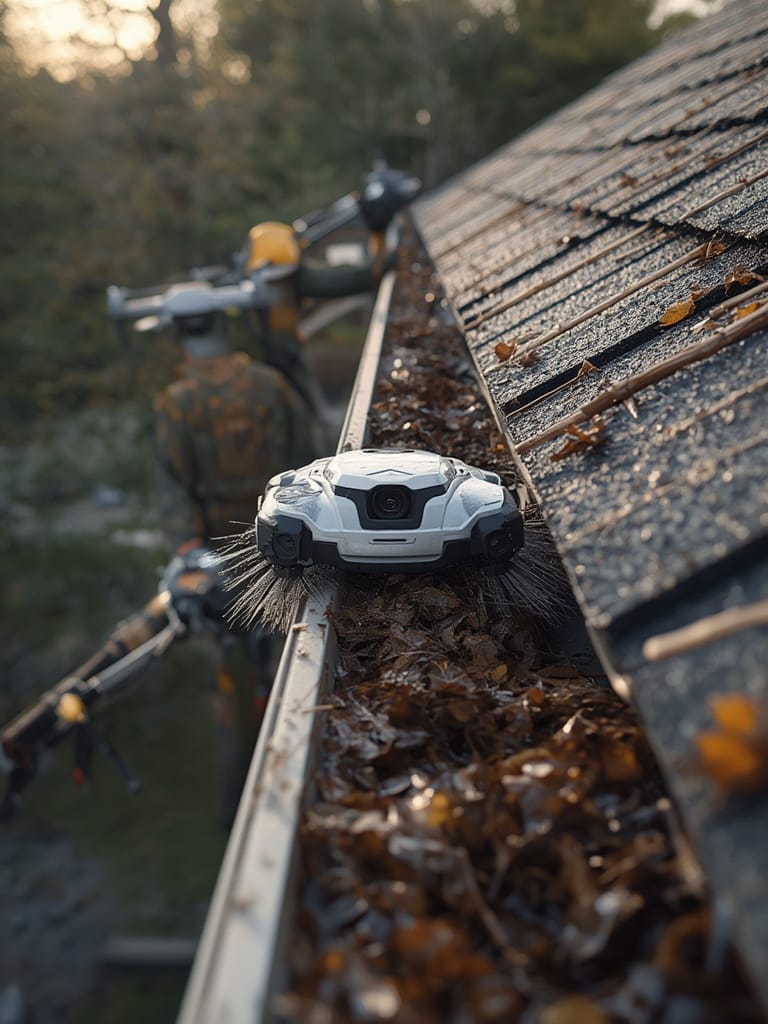
For those with smart home hubs, consider integrating robot scheduling with home automation platforms. Look for models (as with Matter compatible devices) that support remote monitoring or predictive maintenance reminders—these are beginning to appear in the latest releases as Internet of Things (IoT) capability expands.
Reminder: While robot cleaners may cut labor, they are not a “set and forget” solution. For heavily wooded properties or after major storms, you’ll often still need manual spot-checks or cleaning.
Advanced Analysis & Common Pitfalls of Modern Gutter Cleaning
According to recent studies, gutter cleaning robots and drones are gaining traction mainly due to improved safety (eliminating ladder falls) and automation. However, they have important limitations that are often overlooked:
- Flipping/Incomplete Jobs: Robots frequently flip over in gutters, failing to clean entire runs and leaving debris behind. Source
- Wet Leaf Jam/Frequent Stalls: Most models get stuck when encountering wet clumps, forcing manual retrieval and cleanup.
- Blockages Require Manual Effort: Severe clogs (mud, mature plant material) remain beyond current robots’ abilities. You may still need to clear these by hand or hire a pro.
- Lack of Fine Debris Removal: Tiny organic matter (shingle grit, pollen, pine needles) may escape both guards and robots. Over time, these can cause downspout or underground pipe blockages.
- Cost Transparency: Pricing for robot cleaners is opaque and warranty/service costs are rarely publicized. Prototypes are budgeted at $350, but retail models tend to cost significantly more.
| Method | Safety | Performance with Wet Debris | Labor Input | Upfront Cost | Long-Term Maintenance |
|---|---|---|---|---|---|
| Manual (Ladder/Tools) | Poor (80,000 injuries/year) | Medium (can remove any debris but is labor heavy) | High (requires hands-on work) | Low-Medium (tools from $20-$80) | Ongoing physical risk |
| Gutter Guard, No Robot | Higher (reduces climb frequency) | Low (small debris still gets through) | Medium (still needs checks and rare manual cleaning) | Medium-High ($1–$4 per foot installed; varies) | Inspections required |
| Robot Gutter Cleaner | High (minimal ladder use) | Poor-Medium (struggles with wet or heavy blockages) | Low (for easy debris) | High ($350–$800+ estimated, data limited) | Maintenance, battery replacement, may need pro cleanup after failure |
| Cleaning Drone | Incomplete data; not widely adopted for gutters | Unknown | Low but requires operator skill | Very High (complex tech, limited data) | Unknown |
It’s also vital to recognize subtopics neglected by many sources:
- Regional Trends: Asia-Pacific markets show highest growth rates (18.2% CAGR), even as North America maintains the largest current share. Source
- IoT Segmentation: Fully automatic robots make up 60% of the market, some featuring AI for predictive maintenance or remote monitoring.
- Broader End-User Expansion: Beyond homes and stores, government and educational facilities are adopting automated solutions for large-scale safety savings.
For a broader perspective on automation, see our guide to Agentic AI and how autonomous smart home systems are changing daily routines.
Looking to integrate smart cleaning into a connected home? Learn more about Matter compatible devices and how device standards are shaping seamless control.
Curious about smart device features for other cleaning and monitoring challenges? See how air purifiers with PM2.5 monitors or auto litter boxes enable remote monitoring—trends now crossing into gutter maintenance as IoT innovation grows.

Conclusion
Modern Gutter Guard technology, including robot cleaners and in-development drones, offer real safety and time savings—especially for homeowners at risk of ladder injuries or with tall/multi-story roofs. But they do not fully eliminate gutter maintenance, cannot always handle wet or compacted debris, and often require a hybrid approach of tech and occasional hands-on effort. For most users, the optimal solution will be a layered one: mesh guards to minimize everyday debris plus a robotic cleaner for lighter, routine clearing—backed up by remote monitoring or inspection appointments. If you want safer, smarter gutter upkeep, now’s the time to consider which automation path fits your needs. Ready to upgrade your home? Explore the best robot-friendly gutter guards and integration ideas today.
FAQ
Do robot gutter cleaners work with all types of gutter guards?
No. Robot compatibility depends on your guard’s design. For example, micromesh or raised-profile guards may block robotic cleaners, so verify with the manufacturer before buying.
Can a robot gutter cleaner fully eliminate manual gutter cleaning?
No. Robots reduce the need for frequent manual cleaning, but can’t clear compacted blockages or handle all wet debris. Periodic inspections and occasional manual cleanups remain necessary.
How often should I clean gutters if I have both a guard and a robot cleaner?
Twice yearly inspections are recommended. Even the best guard and robot can miss small debris or handle exceptional storms poorly. If you have overhanging trees, check more often.
Are gutter cleaning drones a real solution in 2024?
Drones for gutter cleaning are mostly in the experimental or commercial demo phase. There is little real-world adoption, no robust product data, and most utility cleaning drones focus on building facades and windows, not gutters.
Is automated gutter cleaning worth the investment?
For those at high risk of ladder falls or with extensive/complex roofs, automation (guard plus robot) is increasingly cost-effective over several years, especially versus repeated pro cleaning. For smaller, easily accessed homes, a quality guard and occasional manual cleaning can suffice.