

Smart Diffuser technology is redefining how we experience scent in the home, combining WiFi connectivity, app control, and voice assistant support for a fully automated, mood-enhancing environment. If you’re wondering how smart diffusers work, what makes them different, and how to actually get the best results, this guide offers a direct, realistic breakdown—what you need to know and what to avoid.
Key Takeaways
- Smart diffusers let you automate and personalize home fragrancing using WiFi, mobile apps, and voice commands.
- Market projections show rapid growth, especially for premium, app-integrated models with features like AI learning and multi-scent cartridges.
- Real-world reliability, ownership costs, WiFi security, and platform compatibility should be carefully checked before you invest.
- What Is a Smart Diffuser and Why Does It Matter?
- How to Set Up and Use a Smart Diffuser: Step-by-Step Guide
- Advanced Analysis: Pitfalls, Reliability, Security, and Market Trends
- Conclusion: Should You Invest in a Smart Diffuser?
- Frequently Asked Questions
What Is a Smart Diffuser and Why Does It Matter?
Smart diffusers are next-generation aroma devices that connect to your home’s WiFi or Bluetooth, allowing control via app, voice assistant, or automation platforms like Alexa, Google Assistant, and Apple HomeKit. These devices atomize or vaporize essential oils, dispersing them carefully and consistently throughout your living space.

Unlike standard plug-in air fresheners or manual essential oil diffusers, smart diffusers offer precise scheduling, scene automation (think: lavender for relaxation at bedtime or citrus in the morning), and the ability to trigger scents as part of multi-device routines.
Why does this matter? A smart diffuser can enhance well-being, support sleep or productivity, and help with mood regulation—all while reducing the fuss of manual operation. Thanks to rising demand, the global smart aroma diffuser market is expected to reach $2.65 billion by 2032, fueled by smart home growth and interest in automated wellness solutions. Premium models are growing the fastest as people look for AI recommendations, smart scheduling, and seamless integration with other home tech.
For those building a more unified smart home, you may want to explore Matter compatible devices for even better device integration between Apple, Amazon, and Google ecosystems.
How to Set Up and Use a Smart Diffuser: Step-by-Step Guide
Getting the most out of a smart diffuser means more than just plugging it in. Here’s how to get started, integrate advanced features, and avoid common mistakes:
- Choose the right smart diffuser for your needs. Are you looking for multi-scent cartridge capability, waterless operation, or basic WiFi scheduling? Check for compatibility with Alexa, Google, or the Matter protocol. Consider platform lock-in versus open integration.
- Download the manufacturer’s app. For top models, the app offers scheduling by time, day, or scent profile. Some premium diffusers introduced in 2024 support AI-powered learning—your diffuser will learn and adapt to your routine automatically.
- Connect the diffuser to WiFi. Follow the in-app instructions. Good signal strength near the device is critical for reliable performance.
- Add scents or cartridges. Insert oil bottles, pads, or cartridges. Check for microencapsulation tech on new models for slower, more controlled diffusion, meaning fewer refills and more consistent aroma.
- Set up scent routines and schedules. Use the app to choose when specific scents are released. For instance, set eucalyptus in the morning and chamomile before bed. Premium diffusers now feature LED lighting that can sync with scent profiles for a multi-sensory experience.
- Integrate with home automation. Add your diffuser to Alexa, Google Home, or Apple HomeKit. Trigger scents as part of “wake-up,” “sleep,” or “movie” routines, or when particular room sensors (like presence sensors) detect activity. Learn how Agentic AI is now making home automation pro-active—your diffuser might soon learn and scent your home automatically based on your patterns.
- Maintain your device. Clean water-based diffusers weekly. For waterless, wipe as directed. Monitor app or device alerts for low oil/refill needs.
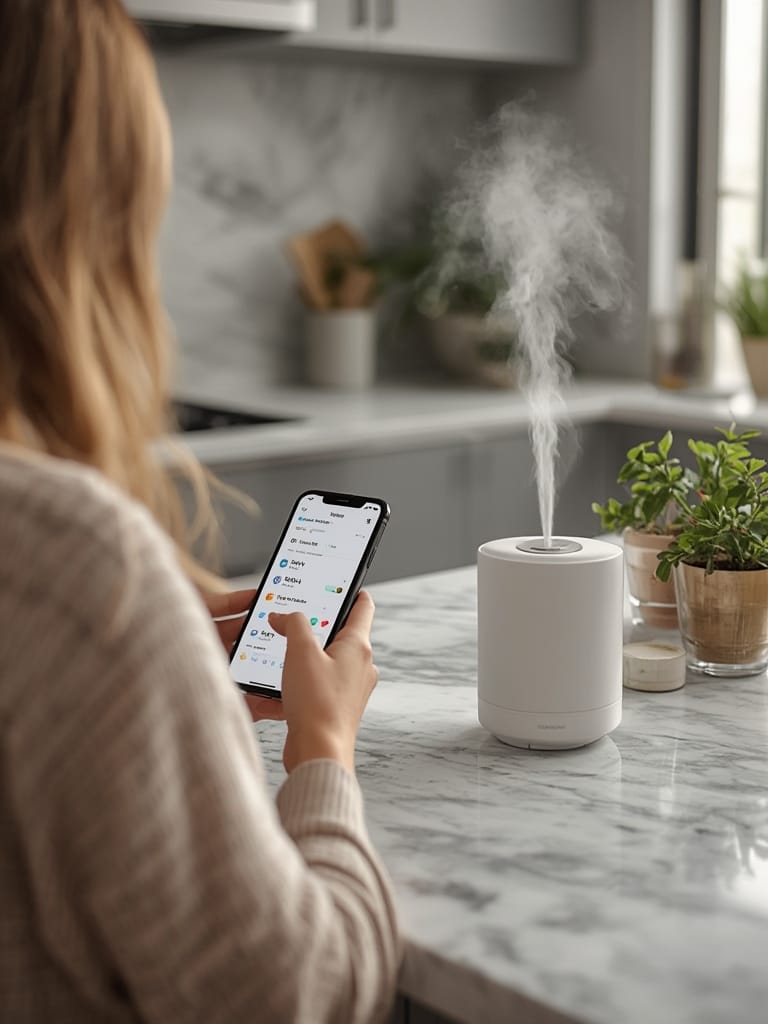
Many smart diffusers also support direct integration with other smart devices. For example, connect your smart diffuser to your smart coffee system for a coordinated “Morning Routine”—the scent of coffee and a burst of energizing citrus play together for the perfect start.
Advanced Analysis: Pitfalls, Reliability, Security, and Market Trends
While the market for smart diffusers is booming, real-world use often exposes challenges that aren’t obvious at first glance. Here are the issues you need to keep in mind:
Warranty, Costs, and App Ecosystem
| Feature | Basic Smart Diffuser | Premium Model | Traditional Diffuser |
|---|---|---|---|
| Upfront Cost | Low to Medium | High | Very Low |
| App Scheduling | Basic (sometimes buggy) | Full automation, multi-scent, AI recommendations | N/A |
| Platform Integration | Alexa or Google only | Alexa, Google, HomeKit, possible Matter | N/A |
| Refill Frequency | Depends (often weekly) | Reduced with microencapsulation (monthly+) | Depends on use |
| Noise Level | Moderate | Very Quiet (for premium) | Usually silent |
| Security Features | Rarely detailed | Sometimes encrypted, but varies | Not connected |
Pitfalls and Reliability Concerns
- WiFi outages or interference can render your diffuser unresponsive. Some models support Bluetooth fallback, others do not.
- App reliability and updates: Many users complain (in reviews not covered by the market research) that manufacturer apps lag behind, especially after phone OS updates.
- If your diffuser is locked to a closed ecosystem or doesn’t support Matter, you might lose smart features if the company stops supporting the product.
- Cartridges and refills for proprietary systems often cost more over time than traditional essential oils.
- Waterless diffusers can be noisier or have a mechanical smell if not properly maintained. Always test out noise levels if you’re sensitive.
Despite innovations—such as AI-powered scent recommendations and advanced multi-scent cartridges—core features like refill alerts, scheduling, and integration tend to work smoothly only on mid-to-top-tier models from brands like Scentair, Pura, and Atomi Smart. For a deep dive into how these devices pair with other wellness tech, explore our anxiety vest reviews for stress-reduction strategies.
Security and Privacy: The Overlooked Element
Connected devices, especially those on WiFi, bring IoT privacy and security risks. While most major brands promote their Alexa, Google, or HomeKit compatibility, specifics on encryption, data protection, or vulnerability patches are rarely published. Before connecting any device, look for two-factor authentication, read up on firmware update policies, and keep your router firmware up to date.
For a more in-depth approach to privacy in the smart home, see our guide to privacy-focused home security—the lessons absolutely apply to connected aroma devices as well.
Conclusion: Should You Invest in a Smart Diffuser?
Smart diffusers deliver real convenience and personalization, making aromatherapy and mood management far easier for busy households or anyone seeking more from their home environment. While the market is full of innovation—multi-scent cartridges, AI-driven routines, and better platform compatibility—you should weigh factors such as up-front cost, refill pricing, app reliability, and WiFi security before buying.
As the category grows (market size projected to nearly double by 2032), choose a model that supports open standards where possible, keep software up to date, and test out new brands if you value features like Agentic AI or deep automation. Ready to start? Select the right Smart Diffuser for your lifestyle and transform your home experience today.
Frequently Asked Questions
Are smart diffusers worth it compared to traditional models?
Yes, if you want automation, schedule control, and seamless routines. However, up-front and refill costs are often higher than traditional diffusers, and features vary dramatically between brands.
Do all smart diffusers work with Alexa, Google, and Apple HomeKit?
No. Many entry- and mid-range models only support one platform. If cross-compatibility is a must, check for Matter-compatible devices before purchasing.
What are the main disadvantages or complaints about smart diffusers?
Common complaints include WiFi disconnections, buggy apps, costly refills, and proprietary lock-in. User reviews also cite that cheaper models may not diffuse scent as effectively as promised.
Is there a privacy risk to connecting a smart diffuser to my network?
Any connected device poses a theoretical risk. Most brands do not publish detailed security policies. Reduce risk by updating your router, selecting devices that mention encryption or frequent firmware updates, and isolating IoT devices on a separate WiFi network if privacy is a top concern.
Can a smart diffuser be used together with other automation like lights or music?
Absolutely—most premium models allow integration with routines, making it easy to combine fragrance with smart lights or even music for a full ambient effect. Use a scene controller for instant, physical control.